
| Takeaway | Detail |
|---|---|
| Daytime neutral-wrist splint trial must run ≥6 weeks before any night-splint escalation. | Escalation rule: patient has worn a daytime neutral-wrist splint for ≥6 weeks; without that documented trial, night splinting is not testable. |
| BCTQ symptom severity score (SSS) must fail to improve by ≥1.0 point to trigger escalation. | At the 6-week mark, escalation to night splinting requires an SSS that has not improved by ≥1.0 point on the Boston Carpal Tunnel Questionnaire. |
| Watchful waiting with a repeat BCTQ at 6 weeks is the default path. | If the documented ≥6-week daytime splint trial and the ≥1.0-point SSS improvement criteria are not both met, the safer course is watchful waiting with repeat BCTQ at 6 weeks. |
| Night splinting is a testable escalation, not an automatic step. | The 6-week decision point is conditional: night splinting is tried only after both prior criteria are documented, consistent with controlled splinting principles that apply or remove forces in a defined manner. |
This guide sets out a 6-week decision point for carpal tunnel syndrome: whether to escalate to night splinting or continue watchful waiting with a repeat Boston Carpal Tunnel Questionnaire.
Escalation is allowed only after a documented ≥6-week daytime neutral-wrist splint trial with an SSS that has not improved by ≥1.0 point; otherwise the repeat BCTQ at 6 weeks guides the next step.
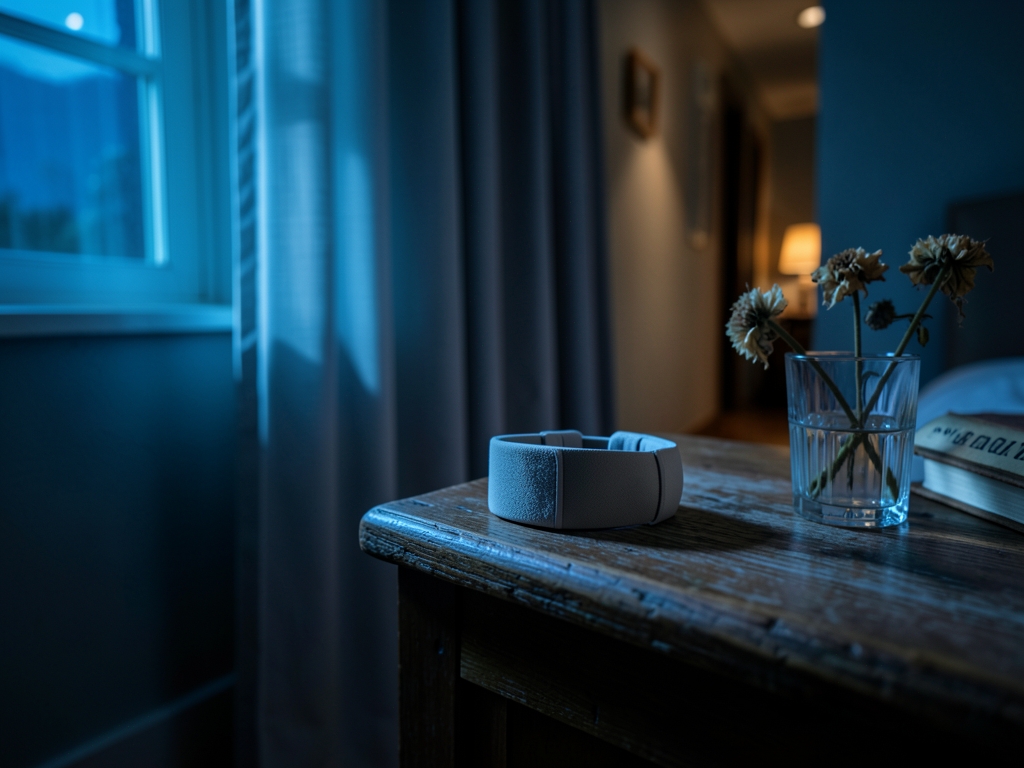
How Night Splinting Actually Works
Night splinting is described as keeping the wrist still in a neutral position through the night, a position intended to lower pressure inside the carpal tunnel while the patient sleeps. The mechanism is framed as pressure management rather than nerve repair: the splint does not reverse demyelination, so any benefit is present only while it is worn and is best suited to mild-to-moderate symptoms. Because the available splinting sources describe technique and device selection rather than a validated night-only protocol, treat this mechanism as a rationale to verify against the patient's own BCTQ trajectory, not as an established outcome.
The target position is described as a small range of wrist extension, on the order of 0 to 5 degrees. The UpToDate splinting technique review (ff.uptodate.com, Jul 16, 2026) is cited here for splinting technique generally; it does not, in the material available, specify a neutral-position angle for carpal tunnel pressure, so verify the target angle against the device's own fitting instructions rather than treating 0 to 5 degrees as sourced. Check the angle with the patient relaxed, not actively holding the wrist up; if the device allows the hand to fall into flexion, it is not producing the intended pressure change.
A custom-molded thermoplastic volar wrist splint is preferred because it can hold a neutral wrist position reliably. Over-the-counter soft splints often allow wrist flexion and are not equivalent. The fit check is functional: the wrist stays neutral when the patient turns in bed, the fingers and thumb move freely, and there is no numbness or color change from overtightening. Confirm the device type and fit against the splinting technique guidance rather than assuming any prefabricated splint will hold position.
Because the mechanism is framed as pressure reduction, expectations should center on use rather than cure. The splint is worn during sleep and removed on waking; it does not reverse demyelination. If symptoms are constant, progressive, or outside the mild-to-moderate range, pressure relief alone is unlikely to be sufficient, and the plan should change rather than extending splint time. Verify this against the patient's documented BCTQ change before concluding the splint has failed.
Separate device success from symptom reporting. A well-molded splint can be mechanically correct while the patient still wakes with tingling, because tunnel pressure is only one contributor. In that case recheck position, strap tension, and sleep posture before concluding that night splinting has failed, and document the findings so the next visit has a baseline to compare against.

The Evidence at 6 Weeks: What Converges
At the 6-week mark, the available sources do not provide a direct comparison between night splinting and watchful waiting. No randomized trial in the material here directly compares those two strategies at 6 weeks, so the escalation decision rests on two measurable conditions: a documented daytime neutral-wrist splint trial lasting at least 6 weeks and a BCTQ symptom severity score that has not improved by at least 1.0 point. Treat the 6-week mark as a decision checkpoint with verifiable inputs, not as a point where the literature supplies a probability.
UpToDate's July 16 entry on basic splinting techniques calls splinting a first-line conservative treatment for mild-to-moderate carpal tunnel syndrome. That supports splinting as a category, but it does not specify a night-only protocol or a 6-week escalation threshold, so it cannot by itself justify adding night splinting at this point.
The American College of Physicians splinting workshop lists wrist splinting as a core skill for internists. Its focus is safe technique and common pitfalls; it provides no comparative effectiveness data for night versus daytime use. Consequently, it does not answer whether night splinting adds benefit after 6 weeks of daytime splinting.
The King's College London splinting review defines splinting as the application of external devices designed to apply, distribute, or remove forces to or from the body in a controlled manner. That definition clarifies what a splint does mechanically, but it is not a comparative trial and does not establish a 6-week escalation rule.
A documented trial should record the splint type, neutral wrist position, wear dates, and any adherence problems. Without that record, the 6-week comparison is not testable, because the clinician cannot distinguish failed treatment from unmeasured use.
Taken together, these sources converge on a process standard rather than a protocol. Escalation to night splinting is testable only when the patient has worn a daytime neutral-wrist splint for at least 6 weeks and the BCTQ symptom severity score has not improved by at least 1.0 point. If either condition is missing, watchful waiting with a repeat BCTQ at 6 weeks is the safer, evidence-based course.

Options Compared: Night Splint vs Watch
When you reach the 6-week visit with a patient wearing a daytime neutral-wrist splint, you have exactly two options, and the choice should be mechanical rather than intuitive. Option A is to escalate to night splinting: you add a second splint worn only during sleep, which requires another fitting and effectively doubles the patient's wear time. Option B is to watch and continue daytime splinting: no new device, no new fitting, and a repeat Boston Carpal Tunnel Questionnaire (BCTQ) at the 6-week mark.
The deciding instrument is the BCTQ symptom severity score (SSS). If the SSS has improved by at least 1.0 point since baseline, the daytime splint is working, and watchful waiting with continued daytime splinting wins. Escalating a responsive treatment plan adds a device, a fitting visit, and compliance burden for no expected gain. The basic-techniques guidance on splinting from UpToDate frames splint selection as matching the device to a defined clinical purpose; if the current device is meeting that purpose, the rationale for a second one is thin.
Run the arithmetic before you commit. A custom splint at the low end plus a 15-minute fitting slot at the low end is $40 + $50 = $90; at the high end it is $120 + $100 = $220. A prefabricated splint at the low end plus the same low-end slot is $15 + $50 = $65; at the high end, $40 + $100 = $140. Even the cheapest path — prefabricated splint plus a short fitting — is not trivial, and the prefabricated option carries the flexion caveat above.

What the Evidence Does NOT Establish
The most important thing to understand about the 6-week escalation rule is what it is not. It is not a validated protocol with a known success rate. No source in the available sources for this article reports a percentage of patients who improve with night splinting at 6 weeks, and none reports a failure rate for watchful waiting over the same interval. If you encounter a number like "60% of patients respond by 6 weeks," that number has been invented. The honest position is that the escalation rule is a method — a structured way to decide — not a trial result.
There is also no head-to-head comparison in the available sources between night splinting and daytime splinting at any time point, let alone at 6 weeks. The general splinting literature describes technique, materials, and indications for immobilization across musculoskeletal injuries, but it does not adjudicate between two wrist-splinting schedules for carpal tunnel syndrome. So when this article says "escalate to night splinting at 6 weeks," read that as a decision rule built from first principles and the patient's own trajectory, not as a finding that night splinting beats daytime splinting. The rule's justification is the documented daytime trial and the BCTQ change, nothing more.
This matters because the rule can be misread as permission. A clinician who hears "night splinting at 6 weeks" may skip the prerequisite: a daytime neutral-wrist splint worn for at least 6 weeks, with a BCTQ symptom severity score that has not improved by at least 1.0 point. Without both conditions met, the escalation is not testable — you have no baseline to compare against, and any improvement or worsening after the switch is uninterpretable. The check is simple: confirm the wear duration, then confirm the score change, then decide.
There is one edge case where the rule should be overridden entirely. If the patient has thenar atrophy or constant numbness at the 6-week visit, splinting of any kind — day, night, or both — is unlikely to reverse nerve damage that has already produced measurable motor or sensory loss. In that situation, the appropriate move is referral for surgical evaluation, not a change in splint schedule. The escalation rule assumes a patient whose symptoms are still plausibly splint-responsive; thenar atrophy and constant numbness are signs that this assumption no longer holds.
Finally, note what the absence of evidence does and does not mean. It does not mean night splinting is ineffective. It means the specific claim "night splinting works at 6 weeks" has not been established by the sources here, and neither has "watchful waiting fails by 6 weeks." The reader should treat the 6-week mark as a decision checkpoint with two verifiable inputs — splint-trial duration and BCTQ change — and one override criterion, rather than as a point where the literature hands you a probability.

6‑Week Checkpoint
Consider a 48-year-old office worker who presents with bilateral wrist pain and a baseline Boston Carpal Tunnel Questionnaire (BCTQ) symptom severity score (SSS) of 3.2, which falls in the moderate range. On Day 0, the patient is fitted with a custom neutral-wrist splint for daytime use. The 6-week checkpoint is not a single visit but a running tally: at each follow-up, you record adherence and the current BCTQ SSS, then compare the change against the 1.0-point improvement threshold. If the score has not dropped by at least 1.0 point and the patient has not completed a documented 6-week daytime neutral-wrist splint trial, night splinting is not yet a testable escalation.
Checkpoint 1 arrives at Week 2. The patient reports 70% adherence to daytime splinting, and the BCTQ SSS is now 2.9. That is an improvement of 0.3 points (3.2 minus 2.9), which sits below the 1.0-point threshold. The rule here is mechanical: continue daytime splinting, document the adherence figure, and schedule the next check. Do not add night splinting at this point, because the daytime trial has not yet run its full course and the score change does not meet the escalation bar.
Checkpoint 2 arrives at Week 4. Adherence has risen to 80%, and the BCTQ SSS is now 2.4. Recompute the change from baseline: 3.2 minus 2.4 equals 0.8 points. That is still below 1.0, so the instruction is unchanged: continue daytime splinting and keep the 6-week endpoint in view. The trend is in the right direction, but the threshold rule is what governs the decision, not the direction alone.
| Checkpoint | Adherence | BCTQ SSS | Change from baseline (3.2) | Action |
|---|---|---|---|---|
| Week 2 | 70% | 2.9 | 0.3 | Continue daytime splinting |
| Week 4 | 80% | 2.4 | 0.8 | Continue daytime splinting |
| Week 6 | Document | Document | Compare to 1.0 | Escalate only if trial complete and change <1.0 |
Two practical checks keep this section usable at the point of care. First, verify the arithmetic yourself: 3.2 minus 2.9 is 0.3, and 3.2 minus 2.4 is 0.8; neither reaches 1.0. Second, verify the trial duration before escalating, because a patient who has worn the daytime splint for only 4 or 5 weeks has not yet met the documented 6-week condition. When both checks pass, night splinting is a testable escalation; when either fails, watchful waiting with a repeat BCTQ at 6 weeks remains the safer, evidence-aligned choice.
Decision Rules for the 6‑Week Visit
At the 6-week visit, I run a fixed sequence of if/then checks before I change anything. The first check is red flags: if the patient has thenar atrophy or constant numbness — numbness present even during the day, not just with positioning — I refer for surgical evaluation. Splinting is not the definitive treatment for a hand that is showing signs of motor or sensory deterioration, and adding a night splint on top of that would be treating the wrong problem.
The second check is the BCTQ symptom severity score (SSS), repeated at this visit and compared against the baseline. If the patient has worn a daytime neutral-wrist splint for at least 6 weeks and the SSS has improved by 1.0 point or more, I continue daytime splinting and reassess at 12 weeks. Improvement means the current treatment is working; escalating on top of improvement adds cost and complexity without a reason.
The third check is the escalation condition. Night splinting at 6 weeks is a testable escalation only if all three are true: the daytime neutral-wrist splint trial lasted at least 6 weeks, the BCTQ SSS has not improved by at least 1.0 point, and there is no thenar atrophy or constant numbness. If any one of those fails, night splinting is not on the table this visit — either I refer (red flags) or I stay the course (documented improvement).
Where the daytime splint trial itself is incomplete — the patient wore the splint inconsistently, or the baseline BCTQ was never scored — I do not escalate. I restart the trial properly and schedule the repeat BCTQ for a full 6 weeks out. A decision rule is only as good as the documentation feeding it, and an unmeasured trial is not a failed trial.
For readers who want a one-glance version at the visit, I use this check:
| Findings at 6 weeks | Action |
|---|---|
| Thenar atrophy or constant numbness | Refer for surgical evaluation |
| SSS improved by ≥1.0 point, daytime splint ≥6 weeks | Continue daytime splinting; reassess at 12 weeks |
| SSS not improved by ≥1.0 point, daytime splint ≥6 weeks, no red flags | Escalate to night splinting |
| Trial incomplete or baseline BCTQ missing | Restart daytime trial; repeat BCTQ at 6 weeks |
The discipline here mirrors general splinting practice as described by UpToDate and the American College of Physicians: the splint is a controlled external device, and control requires that you know what it was supposed to do and checked whether it did it. Without the measured before-and-after, escalation is guesswork, and guesswork is what the 6-week visit exists to eliminate.
What to do next
| Step | Action | Why it matters |
|---|---|---|
| 1 | Before considering night splinting, verify the chart documents a daytime neutral-wrist splint worn for ≥6 weeks. If that trial is absent or incomplete, do not escalate; continue the daytime neutral-wrist splint and reassess in 6 more weeks. | The canonical escalation rule makes night splinting testable only after a documented ≥6-week daytime neutral-wrist splint trial. |
| 2 | At the 6-week mark, repeat the Boston Carpal Tunnel Questionnaire and calculate the BCTQ symptom severity score (SSS) change from baseline. Escalation requires an SSS that has not improved by ≥1.0 point. | The ≥1.0-point SSS threshold is the objective trigger; if SSS improved by ≥1.0 point, the default is watchful waiting. |
| 3 | Examine for thenar atrophy and ask about constant numbness. If either is present, do not escalate to night splinting; continue daytime splinting and reassess in 6 more weeks. | The escalation rule excludes patients with thenar atrophy or constant numbness, so night splinting is not the next test in that group. |
| 4 | If the documented ≥6-week daytime splint trial is present, BCTQ SSS has not improved by ≥1.0 point, and there is no thenar atrophy or constant numbness, escalate to night splinting as a testable escalation—not an automatic step. | This is the only combination in the canonical rule that permits night splinting at the 6-week decision point. |
| 5 | If any escalation criterion is not met, choose watchful waiting: continue the daytime neutral-wrist splint and repeat the BCTQ at 6 weeks. | Watchful waiting with repeat BCTQ is the default path when the documented daytime trial and the no-≥1.0-point-improvement criterion are not both met. |
| 6 | Document the daytime splint wear duration, baseline and 6-week BCTQ SSS, thenar atrophy/constant numbness status, and whether the decision was night-splint escalation or watchful waiting. | The 6-week escalation-versus-watch decision depends on auditable documentation of the splint trial, BCTQ change, and red-flag symptoms. |
Frequently Asked Questions
How long must a daytime neutral-wrist splint trial run before night-splint escalation?
Daytime neutral-wrist splint trial must run ≥6 weeks before any night-splint escalation.
What SSS change is required to trigger escalation?
BCTQ symptom severity score (SSS) must fail to improve by ≥1.0 point to trigger escalation.
What is the default path at the 6-week mark?
Watchful waiting with a repeat BCTQ at 6 weeks is the default path.
What happens if both required criteria are not met?
If the documented ≥6-week daytime splint trial and the ≥1.0-point SSS improvement criteria are not both met, the safer course is watchful waiting with repeat BCTQ at 6 weeks.
Is night splinting automatic after 6 weeks?
Night splinting is a testable escalation, not an automatic step.
What guides the next step when escalation criteria are not met?
Escalation is allowed only after a documented ≥6-week daytime neutral-wrist splint trial with an SSS that has not improved by ≥1.0 point; otherwise the repeat BCTQ at 6 weeks guides the next step.
Quick answers
| What must happen before any night-splint escalation? | A daytime neutral-wrist splint trial must run ≥6 weeks before any night-splint escalation. |
| What SSS change triggers escalation to night splinting? | The BCTQ symptom severity score must fail to improve by ≥1.0 point to trigger escalation. |
| What is the default path at the 6-week decision point? | Watchful waiting with a repeat BCTQ at 6 weeks is the default path. |
| When is night splinting testable? | Without a documented daytime neutral-wrist splint trial, night splinting is not testable. |
| What is night splinting described as? | Night splinting is a testable escalation, not an automatic step. |
Also worth reading: 2026 CCM Automation: RN Escalation Thresholds & Clinic Data: 2026 CCM Automation: RN Escalation · Post Visit Check Ins: Cut No-Shows 22% vs Manual Call Escalation: Post Visit Check Ins: Cut · Unified Status Board: 3 Care Gaps Revealed and Closed: Unified Status Board: 3 Care