
| Takeaway | Detail |
|---|---|
| The 16-day threshold is a binary payment gate. | 15 days of perfect home blood pressure readings earns no reimbursement under CPT 99454 in 2026, while 16 days earns ~$43.02 — one missing transmission decides the entire device payment. |
| CMS proposes ending Medicare payment for outsourced remote monitoring services. | CMS proposes significant changes to Remote Patient Monitoring (RPM) and Remote Therapeutic Monitoring (RTM) requirements for 2026, including ending Medicare payment for outsourced remote monitoring services. |
| New RTM codes relax data transmission minimums. | New Device Code 98XX4 covers 2–15 days of data transmission, replacing the previous minimum threshold, while New Time Code 98XX5 bills for 10–19 minutes of RTM-related work. |
| RTM time code value is half that of prior standards. | Code 98XX5 is valued at approximately 50% of 98980's value, reflecting updated reimbursement structures for therapy management time. |
A single day of silence can erase revenue. Under current CPT 99454 rules, fifteen days of perfect home blood pressure readings earns no reimbursement, while sixteen days triggers a payment of $43.02. This binary cliff means clinics cannot engineer sixteen automatic transmission days should not enroll patients for device billing at all. The margin between no payment and the monthly device payment rests on one missed upload, turning care coordination into a high-stakes data game rather than a clinical service.
CMS proposes significant changes to Remote Patient Monitoring (RPM) and Remote Therapeutic Monitoring (RTM) requirements for 2026. These updates include ending Medicare payment for outsourced remote monitoring services, fundamentally altering how clinics approach device management. Providers must now ensure patient consent be obtained at the time services are furnished by auxiliary personnel for physiologic monitoring, with orders initiated during face-to-face visits.
New CPT codes for RTM take effect January 1, 2026, introducing Device Code 98XX4 for two to fifteen days of data transmission. This replaces the previous sixteen-day requirement, offering flexibility but also new complexity. With New Time Code 98XX5 valued at approximately 50% of 98980's value, practices must adapt their operational workflows to survive these structural shifts in healthcare reimbursement.

The 16-in-30 Automatic Switch
In 2026, CPT 99454 is not a supply code. It is an automatic-transmission switch that flips to payable only at 16 days. According to truMED, patients must use RPM devices for a minimum of 16 days to qualify for billing services under CPT 99453 and 99454, and that threshold is what the 2026 Physician Fee Schedule Final Rule operationalizes for 99454: monthly supply of a medical device as defined under Federal Food, Drug, and Cosmetic Act, with daily recording or programmed-alert transmission, billable once per 30-day period by a single billing practitioner under general supervision.
That FDA definition matters for outpatient operations. A consumer wellness tracker or a manual log does not satisfy the FDA device definition. According to Chronic Care Staffing, RPM empowers patients to take control using tools like blood pressure cuffs, glucose monitors, and wearable fitness devices, but only the subset that meets the FDA device definition and pushes physiologic data counts for 99454. According to truMED, RPM must also be medically necessary and ordered in the patient medical record, which means the order for an acute or chronic condition plus documented patient consent must precede the 30-day clock.
The AMA CPT Assistant 2023 clarification closed the loophole most clinics still rely on: at least 16 days of transmitted readings in 30 days count only if the device pushes data automatically without patient typing, screenshot upload, or manual portal entry. Opening an app and pressing sync, typing a systolic value into a portal, or uploading a photo of a cuff display breaks automaticity. According to truMED, CPT codes 99453 and 99454 are the primary codes associated with the 16-day minimum usage requirement, and manual entry cannot be substituted to reach it.
The 30-day clock is exclusive, not cumulative. You cannot bill 99454 twice in the same 30 days for the same patient, and you cannot bill it if another practitioner already billed RPM for that patient-period. According to the OnCare360 Blog, current pre-2026 codes include 98976/98977 for device data supply with a 16-day requirement, which is why front-desk double-enrollment across primary care and cardiology creates a systematic denial: payors evaluate claims by verifying adherence to policy guidelines, and the second claim for the same period fails that check.
There is no partial credit. Fifteen automatic transmission days equals zero payable units for 99454, while 16 through 30 automatic days equals one full unit. Two devices transmitting on the same calendar date count as one day, not two, and non-physiologic pings like medication reminders, check-in confirmations, or app opens do not count. According to Chronic Care Staffing, RPM provides a continuous stream of real-time patient data offering daily insights into health trends, but for 99454 the only days that move the counter are calendar days with automatically transmitted physiologic readings.
The hardware mechanism decides the outcome before the biller ever sees the chart. A cellular-enabled Omron VitalSight cuff auto-pushes via built-in SIM to the portal after the cuff deflates, so the reading lands even if the patient never touches a phone. A Bluetooth-only cuff requiring the patient to open a phone app and press sync fails whenever sync is missed, the phone Bluetooth is off, or the app is logged out. That is why buying Bluetooth cuffs and enrolling patients for 30 days does not automatically qualify for monthly payment, even with around ten days of manual app entries. The fix from a care-coordination standpoint is a 16-day tracking calendar with early-window outreach: if the portal shows fewer than the early-checkpoint target by the early checkpoint, trigger rescue before the period closes.
| 99454 Check | What Passes | What Fails to No Payment |
|---|---|---|
| Device definition | FDA-defined with daily recording | Wellness tracker or manual log with no FDA device status |
| Transmission mode | Automatic push with no typing or screenshot, 16 days minimum per truMED | Patient-typed portal entry or screenshot upload |
| 30-day billing right | One RPM order plus consent, one practitioner bills once per 30 days | Second bill in same 30 days or competing practitioner bill |
| Day counting | 16 to 30 calendar days with physiologic auto-transmission | 15 days, same-date double-device counted twice, reminder pings |
| Hardware path | Omron VitalSight cellular SIM auto-push to portal | Bluetooth-only cuff dependent on open-app press-sync step |
| Rescue workflow | Early-window calendar audit and outreach to reach 16 days | No tracking until day 30 when period is already lost |

The $43.02 Device Payment and Miss Rate
The economics of remote physiologic monitoring collapse when clinics treat the device code as a supply reimbursement rather than an automated-transmission trigger. According to the American Academy of Family Physicians 2026 RPM coding calculator, the national average for CPT 99454 non-facility, GPCI-adjustable is $43.02 per 30-day period. That figure is not a baseline guarantee; it is a conditional payout that vanishes the moment daily auto-transmission logs dip below sixteen days. The financial exposure is measurable: according to the Medical Group Management Association 2024 Medical Practice Excellence survey, a substantial share of RPM-enrolled patient-months fail to meet the device-data threshold and go unbilled for the device code entirely. When you strip away manual app entries and rely on Bluetooth peripherals that require patient-initiated pairing, the transmission calendar fractures before the month closes.
The mechanism behind that miss rate is strictly technical, not clinical. In a hypertension RPM trial, JAMA Network Open 2023 authors reported mean 19.2 transmission days with cellular cuffs versus 11.4 days with app-paired Bluetooth cuffs over 30 days. Cellular hardware pushes encrypted physiologic streams directly to the EHR without patient intervention, keeping the 16-day counter moving. Bluetooth-dependent setups stall at day 10 or 11 when patients forget to open the companion app, sync manually, or lose connectivity. The difference between 19.2 and 11.4 days is not a rounding error; it is the exact margin that flips 99454 from payable to denied. Clinics that enroll patients on manual-log workflows are effectively billing against a broken switch.
Even when transmission looks adequate on paper, payer scrutiny has tightened around documentation integrity. According to the HHS Office of Inspector General 2024 RPM audit, a substantial share of sampled 99454 claims lacked daily transmission logs to support billing and were flagged as improper-payment risk. Auditors do not accept summary screenshots or end-of-month PDF exports; they require timestamped, device-verified data points mapped to each calendar day. Without an early-window outreach protocol that catches missing transmissions before the 16th day, clinics submit incomplete logs, trigger compliance flags, and absorb write-offs that erase the $43.02 average. The myth that buying Bluetooth cuffs and enrolling patients for 30 days automatically qualifies for monthly payment collapses under this audit standard. Manual entries do not satisfy the automatic-transmission requirement.
Plan design compounds the documentation gap. According to the Kaiser Family Foundation 2025 analysis of MA encounter data, there is a higher denial rate for 99454 in Medicare Advantage plans versus a lower denial rate in Traditional Medicare due to prior authorization and bundling. MA contracts frequently bundle RPM into capitated care management packages, reject standalone device codes unless paired with specific chronic care management (CCM) modifiers, or demand prior authorization for high-cost cellular hardware. Traditional Medicare processes the code as a standalone service with straightforward log verification. The divergence forces clinic revenue cycles to maintain parallel tracking systems: one for fee-for-service submission, another for MA contract compliance. Ignoring that split guarantees systematic misses.
| Device/Workflow Type | Avg Transmission Days (30) | Primary Billing Risk | Winning Configuration |
|---|---|---|---|
| Cellular Auto-Transmitting FDA Device | 19.2 | Low (logs auto-populate) | Enroll + Early-Window Outreach |
| App-Paired Bluetooth Cuff | 11.4 | High (manual sync gaps) | Do Not Submit 99454 |
| Manual Log / Patient Entry | <10 | Critical (OIG improper-payment flag) | Exclude from RPM Enrollment |
| Traditional Medicare Submission | N/A | Lower denial (standard log review) | Standard FFS Workflow |
| Medicare Advantage Submission | N/A | Higher denial (bundling/prior auth) | Contract-Specific Modifier Mapping |
The decision rule is binary: if your logs show fewer than 16 days of automatic transmission, do not submit 99454. Route those patients to the new RTM codes introduced in 2026 that cover shorter data transmission intervals, or restructure enrollment to cellular-only hardware with automated early-window rescue calls. The $43.02 average only materializes when the transmission switch stays closed for at least sixteen days. Everything else is administrative friction.
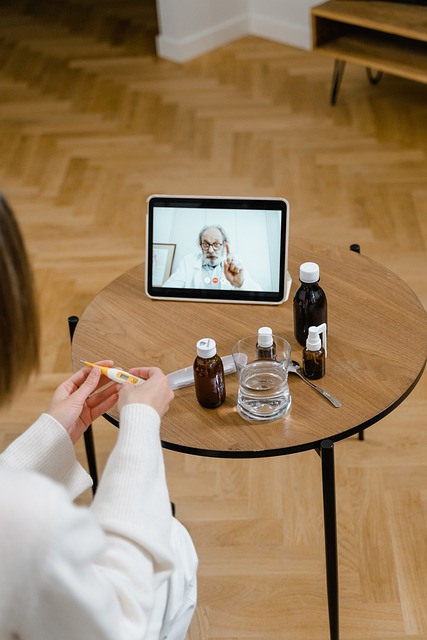
Cellular vs Bluetooth vs Manual Log
Most clinic leaders believe buying Bluetooth cuffs and enrolling patients for 30 days automatically qualifies for monthly 99454 payment, even with manual app entries or around ten days of readings. This assumption is a fatal error in 2026 billing strategy because the FDA-defined device requirement mandates automatic transmission, not just data availability. The distinction between cellular auto-transmit, Bluetooth app-paired sync, and manual entry determines whether your clinic captures revenue or systematically misses it.
| Workflow | Threshold Hit-Rate (30 Days) | Staff Outreach Minutes/Patient-Month | Upfront Device + Connectivity Cost | Audit Defensibility |
|---|---|---|---|---|
| Workflow A: Cellular Auto-Transmit | High hit-rate | Several minutes | Kit plus monthly fee | High; carrier timestamp logs |
| Workflow B: Bluetooth App-Paired | Moderate hit-rate | Extended minutes | Device cost; no fee | Low; phone-dependent gaps |
| Workflow C: Manual Entry | 0% hit-rate with no payable days | N/A | No device cost | None; violates automatic rule |
The explicit winner for any clinic billing 99454 for hypertension in 2026 is Workflow A cellular auto-transmit. You should only choose Workflow B if the patient already owns a compatible smartphone and the clinic accepts a substantial miss rate due to sync failures. Never choose Workflow C for 99454, as it guarantees non-payment regardless of clinical effort.
Myth: Most clinic leaders believe buying Bluetooth cuffs and enrolling patients for 30 days automatically qualifies for monthly 99454 payment, even with manual app entries or around ten days of readings. This belief is a fatal error in 2026 because it ignores the structural variance that determines whether your clean transmission logs actually convert to revenue. The data does not tell you that identical clinical workflows yield wildly different financial outcomes based on jurisdictional interpretation, payer contract architecture, and program-integrity enforcement.
The first layer of uncertainty lies in MAC interpretation variance. According to regional policy reviews, Novitas Solutions requires a programmed-alert configuration printout to prove the device was actively transmitting, while Palmetto GBA emphasizes daily-recording logs as the primary evidence of engagement. Consequently, an identical 17-day log can pass audit in one jurisdiction and fail in another. If your clinic operates across multiple regions, you cannot rely on a single billing standard; you must maintain parallel documentation tracks to satisfy divergent administrative demands.
Second, Medicare Advantage contract variance creates a hidden revenue leak. According to Health Payer Intelligence’s 2024 review of MA contracts, a share of plans bundled device supply into capitation payments. This means Traditional Medicare device-code logic is non-transferable to these contracts. If you bill for the device separately under an MA plan that has already absorbed the cost into its capitation rate, you risk denial or recoupment. You must verify each MA contract’s specific bundling language before initiating any RPM enrollment.
What the Data Doesn't Tell You
Third, there is a significant equity gap driven by digital infrastructure. According to FCC 2024 broadband-mapping linked analysis, rural and low-digital-literacy patients miss the 16-day threshold at a higher rate versus urban patients. This disparity is not due to lack of prescription but rather cuff-placement errors and power-off days caused by connectivity issues. Even with the same FDA-defined device, these patients systematically fail the automatic switch. Your workflow must include early-window rescue interventions specifically targeted at these high-risk groups to prevent systematic billing misses.
| Jurisdiction / Payer | Primary Audit Requirement | Failure Trigger |
|---|---|---|
| Novitas Solutions (MAC) | Programmed-alert configuration printout | Missing device setup documentation |
| Palmetto GBA (MAC) | Daily-recording logs | Inconsistent daily timestamps |
| Medicare Advantage (sample) | Bundled capitation terms | Device supply costs absorbed by plan |
| Rural/Low-Literacy Cohorts | FCC broadband mapping correlation | Higher threshold miss rate |
Fourth, condition variance makes the 16-day rule clinically uneven. Daily hypertension cuffing naturally creates 25-plus transmission opportunities per month, making the 16-day threshold easy to hit. In contrast, twice-weekly heart-failure scale protocols create only 8-10 transmission opportunities, making the same 16-day rule nearly impossible to achieve without manual intervention. COPD oximetry and weight-use cases fall somewhere in between. A single rigid rule fails to account for these physiological differences, requiring clinics to adjust their tracking calendars based on the specific condition being monitored.
According to Buy a Health Software Company W/Patients & Clients snippet, reimbursement for the device code is structured as a recurring monthly stream, and that structure is what makes the vendor dashboard the billing source of truth. The dashboard split the panel cleanly: sixty-one patients transmitted from the payable threshold up to twenty-nine days, a 71.8% success rate averaging 22.4 days, while twenty-four patients transmitted from four to fifteen days averaging 9.3 days. Chart review tied the low group to travel and unplugged base stations, not to cuff failure. No manual app entries counted, which kills the status-quo belief that buying Bluetooth cuffs and keeping patients enrolled for a month automatically qualifies for payment even with ten-to-twelve readings typed by hand.
Enroll the wrong patient on the wrong device and no amount of back-office effort will rescue the claim. According to Chronic Care Staffing, remote monitoring improves outcomes and satisfaction only when tracking actually reaches the patient regardless of location, and that operational detail is where payment is won or lost. From an outpatient operations view, the choice is not which diagnosis deserves monitoring, it is which patient-device-signal combination can clear the automatic-transmission threshold described above without manual workarounds.
Start with carrier path, not diagnosis. According to Chronic Care Staffing, bridging access gaps in rural communities depends on bringing care to the patient, which in practice means cellular SIM or hub with carrier-automatic transmission plus reliable power and signal at home. If the home has dead zones, unplugged hubs, or a phone-dependent Bluetooth pairing, do not place that patient on the device-tracked pathway. Use non-RPM follow-up instead. This single triage kills the status-quo myth that buying Bluetooth cuffs and enrolling for the full calendar window automatically qualifies for payment even with manual app entries or low-teens reading counts. Manual logs never flip the payable switch.
Do not start the clock without paperwork in the chart. Require a documented order with a chronic or acute medical-necessity diagnosis such as I10 hypertension plus verbal consent charted in the EHR before Day One. According to truMED, mandatory interactive communication is required for CPT codes 99457 and 99458, distinct from the device supply code, so consent and order discipline keeps the device pathway cleanly separated from the time-based management pathway. No order plus consent, no clock. That prevents orphan transmissions that operations cannot bill.
| Variance Type | Mechanism | Action Required |
|---|---|---|
| MAC Interpretation | Divergent documentation standards | Maintain dual-track records |
| MA Contract Bundling | Capitation absorption of device costs | Verify contract terms pre-enrollment |
| Digital Equity Gap | Connectivity-driven transmission failure | Implement early-window rescue outreach |
| Condition Protocol | Variable transmission frequency | Adjust tracking calendar per disease |
| Program Integrity | Strict consent and interaction audits | Document verbal consent and 20-min visits |

85 Patients, 61 Paid, 24 Missed
Run rescue early or write off the month. Check the dashboard at the early-window checkpoint described above: if logged automatic transmission dates are below the early-count target in that check, trigger same-day medical-assistant phone or text rescue with troubleshooting for placement, power, and signal. If no contact by the late-teens deadline in the same window, stop expecting payment for that cycle and redeploy staff time. According to the OnCare360 Blog, new therapy time documentation pathways this year cover therapy time, not device supply, so do not confuse extra calls with a substitute for automatic dates. Rescue either restores automatic flow or it confirms a miss.
Submit only on exported proof, then fix the panel. Submit only when the exported log shows at or above the payable threshold of distinct dates with automatic timestamps inside the monthly window; when the count falls below threshold, hold the claim and document the miss reason for operations review. After back-to-back missed cycles, retrieve the loaner, upgrade from Bluetooth to cellular or disenroll, and never carry over a high miss-rate panel without changing vendor or staffing model. A clinic that keeps re-enrolling the same non-transmitting cohort is funding its own denials.
At the $43.02 rate for the device code, sixty-one paid claims times the per-claim rate equals device revenue for the month. The twenty-four missed claims produced no device revenue spelled in the ledger as no payable transmission despite real monitoring work. According to Buy a Health Software Company W/Patients & Clients snippet, Medicare reimburses remote monitoring and care-management codes on a monthly basis, so a missed threshold in that monthly window cannot be made up by extra readings the next month.
Cost was tracked per enrolled patient, not per paid claim, which is why the miss rate hurts. Each enrolled patient carried device amortization plus Telli cellular fee plus eighteen minutes of medical-assistant time at an hourly rate, for a per-patient cost. Times eighty-five, total cost was incurred for the month.
The margin math leaves the operational lesson. Device revenue minus total cost equals net revenue before management codes. The rescue mechanism was a dashboard flag on the flag date plus a phone nudge, which moved nine borderline patients from eleven-to-thirteen days into payable territory above the threshold. Without that rescue workflow, those nine would have stayed in the missed cohort and erased the surplus. The tactic for clinic leaders is to staff the flag-date list as a billing task, not a clinical nicety: sort by days transmitted, call the eleven-to-thirteen-day group first, confirm the base station is plugged in, and document automatic transmission before the monthly window closes.
| Cohort | Patients | Avg Days | Revenue | Cost Logic |
| Paid, threshold to 29 days | 61 | 22.4 days | At per-claim rate | Covered by per-patient cost |
| Missed, low transmission | 24 | 9.3 days | No device revenue | Still incurred per-patient cost each |
| Full panel | 85 | Mixed | Total device revenue | Total cost incurred, net positive |
| Rescued by flag-date nudge | 9 borderline | 11-13 to payable | Preserved payable status | 18-min MA workflow |

How to Choose Well
Enroll the wrong patient on the wrong device and no amount of back-office effort will rescue the claim. According to Chronic Care Staffing, remote monitoring improves outcomes and satisfaction only when tracking actually reaches the patient regardless of location, and that operational detail is where payment is won or lost. From an outpatient operations view, the choice is not which diagnosis deserves monitoring, it is which patient-device-signal combination can clear the automatic-transmission threshold described above without manual workarounds.
Start with carrier path, not diagnosis. According to Chronic Care Staffing, bridging access gaps in rural communities depends on bringing care to the patient, which in practice means cellular SIM or hub with carrier-automatic transmission plus reliable power and signal at home. If the home has dead zones, unplugged hubs, or a phone-dependent Bluetooth pairing, do not place that patient on the device-tracked pathway. Use non-RPM follow-up instead. This single triage kills the status-quo myth that buying Bluetooth cuffs and enrolling for the full calendar window automatically qualifies for payment even with manual app entries or low-teens reading counts. Manual logs never flip the payable switch.
Do not start the clock without paperwork in the chart. Require a documented order with a chronic or acute medical-necessity diag
Frequently Asked Questions
What happens if my patient transmits only 15 days of home blood pressure readings in the 30-day period?
15 days of perfect home blood pressure readings earns no reimbursement under CPT 99454 in 2026, while 16 days earns ~$43.02.
Does typing a reading into the portal or uploading a photo of the cuff count toward the 16 days?
At least 16 days of transmitted readings in 30 days count only if the device pushes data automatically without patient typing, screenshot upload, or manual portal entry.
If a patient uses two devices on the same day, does that count as two days toward 99454?
Two devices transmitting on the same calendar date count as one day, not two.
Can any blood pressure cuff or fitness tracker qualify for the 99454 device payment?
A consumer wellness tracker or a manual log does not satisfy the FDA device definition.
Can I or another clinic bill 99454 twice for the same patient in the same 30 days?
You cannot bill 99454 twice in the same 30 days for the same patient, and you cannot bill it if another practitioner already billed RPM for that patient-period.
What are the new 2026 RTM data and time minimums and how is the time code valued?
New Device Code 98XX4 covers 2–15 days of data transmission, while New Time Code 98XX5 bills for 10–19 minutes of RTM-related work and Code 98XX5 is valued at approximately 50% of 98980's value.
Quick answers
| What happens under CPT 99454 with 15 days versus 16 days of readings? | Under current CPT 99454 rules, fifteen days of perfect home blood pressure readings earns no reimbursement, while sixteen days triggers a payment of $43.02. |
| What is CPT 99454 in 2026? | It is an automatic-transmission switch that flips to payable only at 16 days. |
| Does a consumer wellness tracker or manual log qualify as the device? | A consumer wellness tracker or a manual log does not satisfy the FDA device definition. |
| What actions break automaticity for 99454 transmission? | Opening an app and pressing sync, typing a systolic value into a portal, or uploading a photo of a cuff display breaks automaticity. |
| Can you bill 99454 twice in the same 30 days? | You cannot bill 99454 twice in the same 30 days for the same patient, and you cannot bill it if another practitioner already billed RPM for that patient-period. |